
The Digital Lifestyle of Modern Mobile App Users
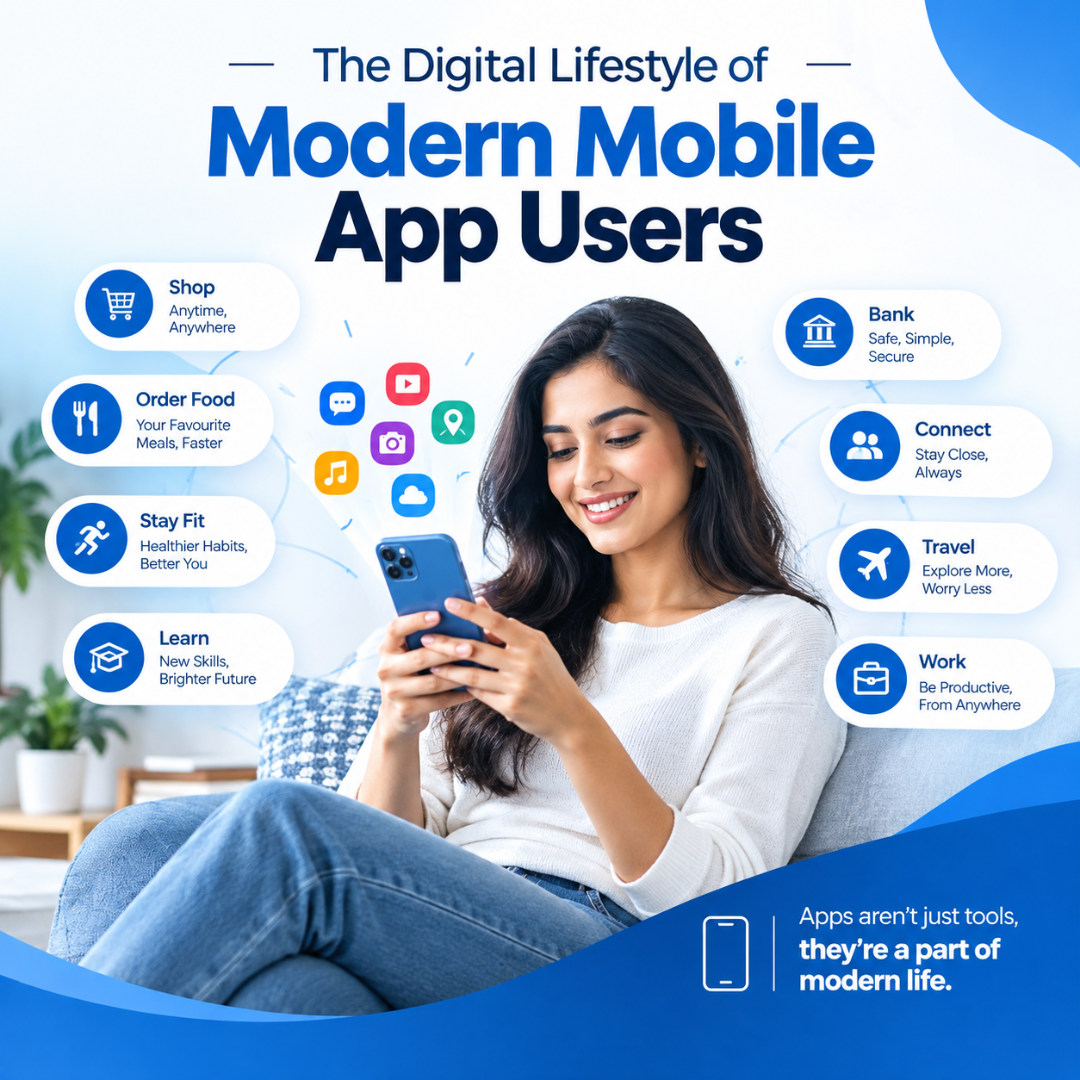
Mobile applications have become a natural part of everyday life. From checking messages in the morning to making payments, ordering food, booking a ride, shopping online, or attending a meeting, we depend on mobile apps for many of our daily activities.
What makes mobile apps valuable is not simply the technology behind them. It is the convenience they bring to everyday life. Tasks that once required more time and effort can now be completed within a few minutes from a smartphone.
As our daily routines become more digital, the expectations of mobile app users are also changing. People want applications that are simple to use, quick to respond, secure, and genuinely useful.
Mobile Apps Have Become Part of Everyday Life
A smartphone today can help us manage almost everything in one place.
We can transfer money without visiting a bank, purchase products without going to a store, book tickets without standing in a queue, and communicate with people from almost anywhere. This level of convenience has changed the way people interact with businesses and services.
Users have become comfortable with having information and services available whenever they need them. As a result, mobile applications are no longer seen as an additional option. For many customers, they have become one of the preferred ways to connect with a business.
Convenience Matters to Every User
People usually choose mobile apps because they make things easier.
When someone opens an application, they expect to find what they need without going through unnecessary steps. Clear menus, simple registration, easy payments, useful search options, and quick access to important information can make the entire experience better.The best applications are often the ones that feel simple to use.
This does not mean they have simple technology behind them. It means the technology has been designed carefully enough that users do not have to think about it.For businesses, creating this level of convenience can make a meaningful difference in customer satisfaction.
A Good Experience Keeps Users Connected
Downloading an application is only the beginning.
The real challenge is giving users a reason to continue using it.
An attractive design may create a good first impression, but users also pay attention to how smoothly the application works. They expect pages to load quickly, buttons to respond correctly, information to be easy to understand, and important actions to work without difficulty.
When these small details come together, users naturally feel more comfortable with the application.A positive experience can also influence the way customers see the business behind it. A reliable and well-designed application reflects professionalism and shows that the business values its customers' time.
Personalization Makes the Experience More Relevant
Modern users appreciate applications that provide relevant experiences.
A shopping application may remember favourite products. A music application may suggest songs based on listening preferences. A food delivery application may display previously ordered meals or favourite restaurants.
These features save users from repeating the same actions every time they open the application.
However, personalization works best when it remains useful and respectful. Users should feel that the application is helping them rather than collecting unnecessary information.Finding the right balance between convenience and privacy is important for creating long-term trust.
Speed and Performance Make a Difference
Users expect mobile applications to respond quickly.
A slow-loading page, an unresponsive button, or an application that frequently crashes can easily create frustration. Even an application with excellent features may lose users if the overall performance is poor.
This makes speed and reliability important parts of the user experience.
Applications should be designed and tested to work smoothly across different devices and network conditions. Regular improvements and updates can also help maintain performance as technology changes.When an application consistently works as expected, users are more likely to depend on it.
Security Creates Confidence
As people use mobile applications for more activities, they also share more information through them.Personal details, login credentials, addresses, payment information, and transaction records may all be handled through a mobile application.
Naturally, users expect this information to remain protected.
Businesses need to consider security throughout the development and maintenance of an application. Secure login processes, protected transactions, appropriate permissions, and responsible handling of user information all contribute to building confidence.
Users may not always notice good security, but they certainly value the trust it creates.
Mobile Apps Are Changing the Customer Experience
Mobile applications have also changed the relationship between businesses and customers.
Previously, customers often had to visit a physical location, make a phone call, or send an email to access a service. Today, many of these interactions can happen directly through an application.
Customers can place orders, schedule appointments, track deliveries, make payments, receive updates, and access support from their phones.
For businesses, this creates a direct connection with customers.
Useful notifications, personalized services, order updates, and easy access to support can help businesses stay connected with users throughout the customer journey.
Mobile Technology in the Workplace
The influence of mobile applications is not limited to personal activities.
Businesses are increasingly using mobile apps to support employees and everyday operations. Applications can help teams manage attendance, tasks, customer information, approvals, schedules, reports, and internal communication.
This is particularly useful for employees who work remotely, travel frequently, or spend time outside a traditional office environment.
Providing access to important information through a mobile device can help employees respond faster and manage their responsibilities more efficiently.
The Future of the Mobile Lifestyle
Mobile technology will continue to evolve, and user expectations will evolve with it.
Artificial intelligence, automation, cloud technology, digital payments, smart recommendations, and connected devices are already creating new possibilities for mobile applications.
However, adding more technology does not automatically create a better application.
Users still value the basics: simplicity, speed, security, reliability, and convenience.
The most successful applications will be those that use new technology only when it provides real value to the user.
Creating Mobile Experiences That People Value
The digital lifestyle of modern mobile app users is ultimately built around one simple expectation: technology should make everyday life easier.
People do not use an application because of the programming language or technology used to build it. They use it because it helps them complete something they need to do.
For businesses, this is an important point to remember.
A successful mobile application should begin with an understanding of the user—their needs, their expectations, and the problems they want to solve.
When good technology is combined with thoughtful design and a clear understanding of users, a mobile application can become more than another digital platform. It can become a valuable part of the customer's everyday experience.
As mobile technology continues to grow, businesses that focus on creating simple, secure, reliable, and meaningful experiences will be in a stronger position to build lasting relationships with their users.
Back to Blogs